Main Content
Main Content Area
To Ensure No Second Failure
Revision Hair Transplant
Hair transplant method for a
more perfect hairline
High-Difficulty Revision Hair Transplant
-
1
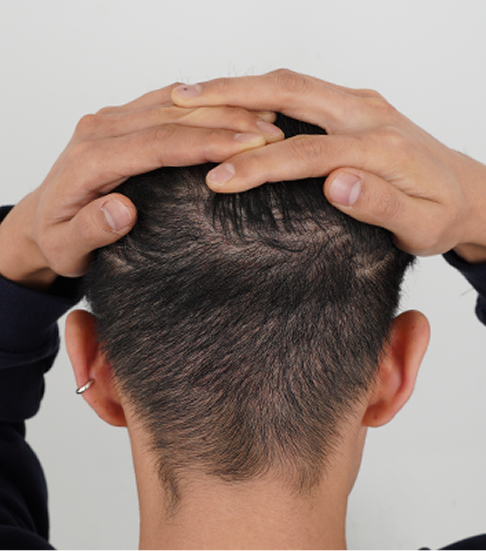
Limited Number of Possible Surgeries
The number of hair follicles available for extraction varies by individual. Since hair transplantation utilizes resources from the occipital area, the number of possible revision surgeries is also limited.
-
2
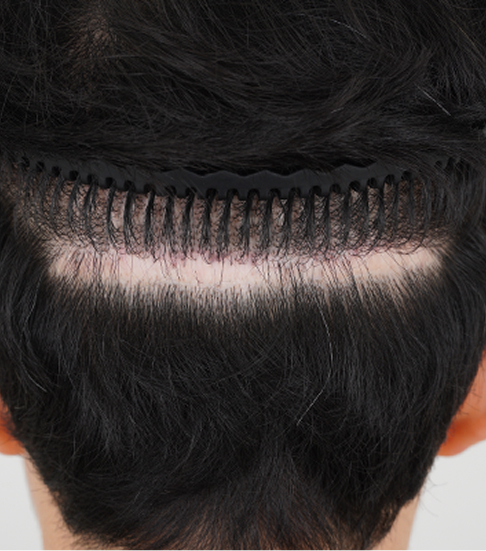
Skin Deformation in the Occipital Area
The tissue in the occipital area is damaged due to extraction during the primary surgery. Deformed skin and scarring reduce scalp elasticity and compromise blood supply, inevitably lowering the graft survival rate.
-
3
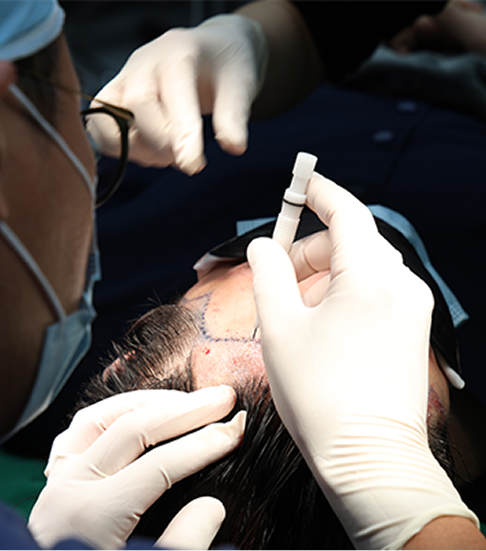
Advanced Technique Required
Advanced techniques are required to control the direction, angle, and depth of the implanted hair to ensure no damage occurs to the remaining transplanted hair and existing hair.
-
4
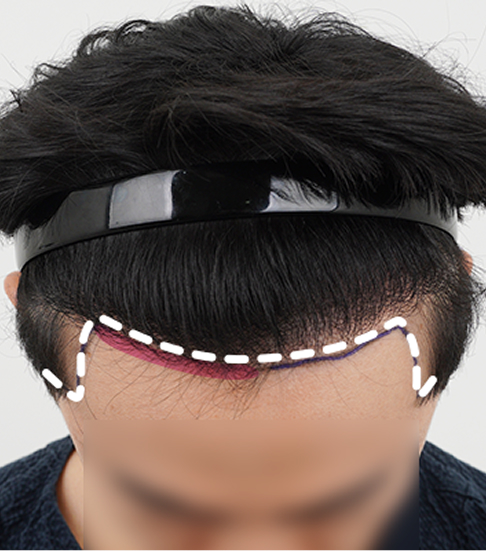
Removal of Previously Transplanted Hair
If hair from the primary surgery was wrongly implanted in areas that need proper filling, the previously transplanted hair may be entirely removed before performing a new hair transplant.
Who Needs
Revision Surgery?
-
If density is insufficient due to engraftment failure
-
If the design is unnatural and does not suit the face shape
-
If the placement of grafts is wrong,
looking thick like doll hair -
If the forehead and face are still wide due to graft count estimation failure
Revision Surgery Cases
-
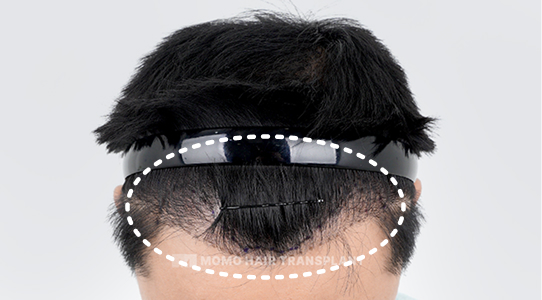
CASE 01
Insufficient Density due to Engraftment Failure
Sparse hair growth is a typical example requiring revision surgery.
-
If follicles were damaged during the separation process
-
If grafts were implanted too deeply
-
If excessive force was used during implantation
If not performed by skilled follicle separators and medical staff, grafts may not survive properly, causing hair to grow sparsely and reducing density.
-
-
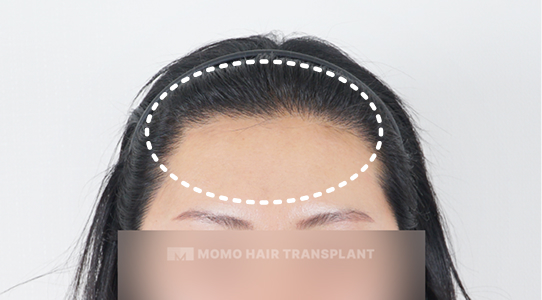
CASE 02
Unnatural Design
A design that does not fit the face shape is aesthetically unsatisfactory.
-
Applying a rounded, feminine design to a male
-
Applying a straight, masculine design to a female
-
Designing without considering face shape and proportions
Artificial designs that do not consider gender or individual characteristics do not provide aesthetic satisfaction, leading to consideration of revision surgery.
-
-
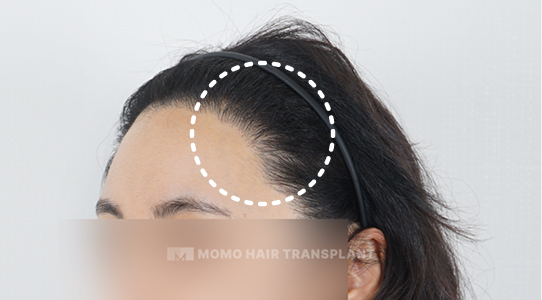
CASE 03
Incorrect Graft Placement
Without selective placement of follicles, the result becomes unnatural.
-
Planting multi-hair follicles at the front of the hairline
-
Planting single-hair follicles in thinning areas that need volume
Selective placement of appropriate follicles is essential to volumize empty areas and create a natural hairline.
-
-
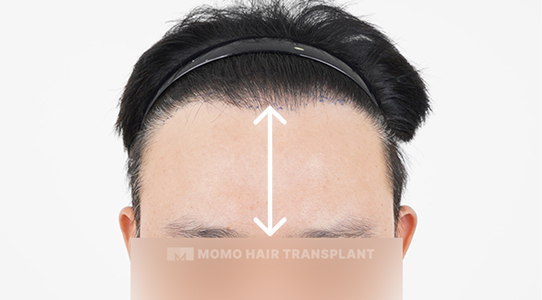
CASE 04
Still Wide Forehead and Face
Failure in graft count estimation does not improve the area of concern.
-
Wanting to lower the line further for a narrower forehead
-
Wanting to reduce the side profile by transplanting sideburns and temples
If the wide forehead and facial area are still a concern due to incorrect graft count estimation, additional transplantation becomes necessary.
-
Why MOMO Revision Surgery
Is Special
-
Skilled Specialists
Performed only by skilled specialists
with over 10 years of experience -
Accurate Analysis
Revision surgery plan
through precise analysis
of current condition -
Delicate Technique
Delicate technique implantation
minimizing
follicle loss
Since the difficulty level of success differs between primary and revision surgeries,
MOMO implants with delicate techniques to maximize patient satisfaction through precise calculation of available donor hair.
MOMO's Revision Surgery Plan
step 1
Analysis of primary surgery
failure causes with hair transplant specialist
step 2
Check available donor follicles
in the occipital area,
scalp elasticity,
and scarring
step 3
Proposal of personalized design and
treatment method
MOMO Speaks Through Results
-
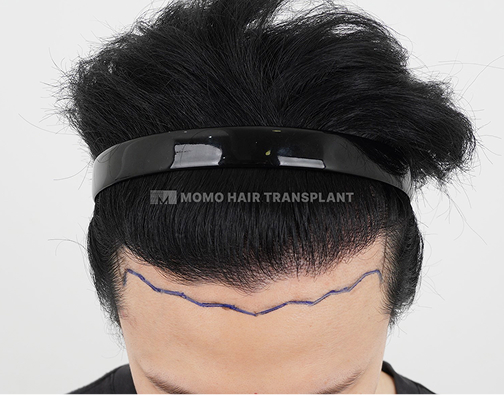
Before 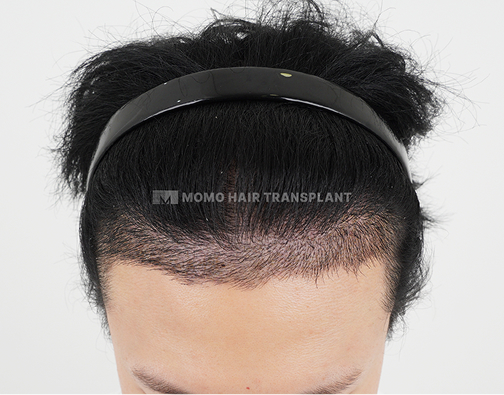
After - Line Lowering FUT Hair Transplant
- 2,400 Hairs
- 10 Days Post-op
2024.07.16 ~ 2024.07.26
-
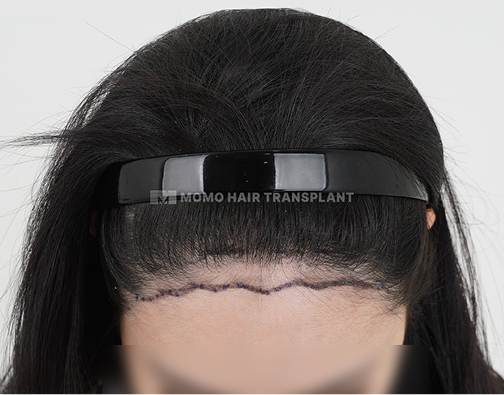
Before 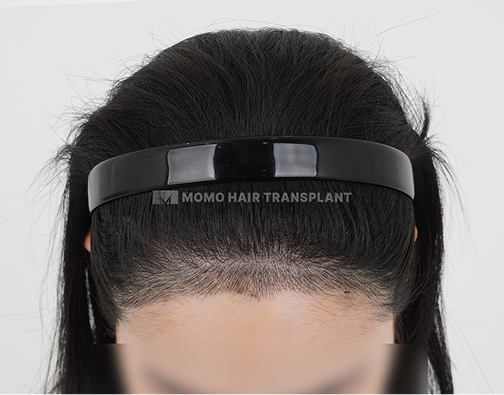
After - Line Lowering FUT Hair Transplant
- 1,100 Hairs
- 13 Days Post-op
2024.05.08 ~ 2024.05.21
-
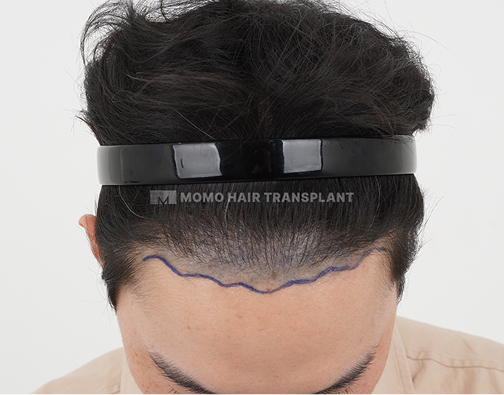
Before 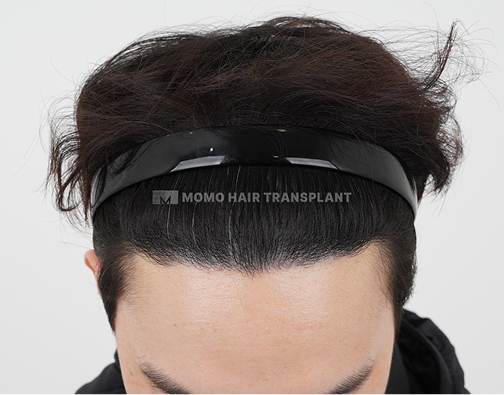
After - Density Reinforcement FUT Hair Transplant
- 2,600 Hairs
- 316 Days Post-op
2023.05.18 ~ 2024.03.29
-
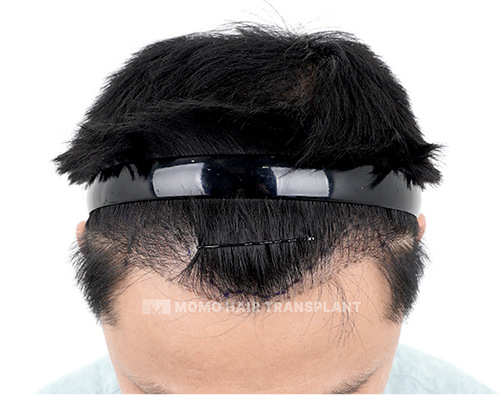
Before 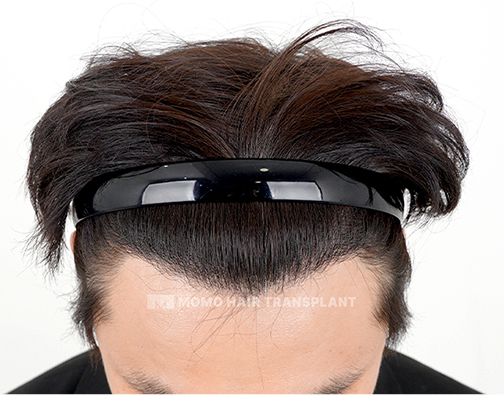
After - Density Reinforcement FUE Hair Transplant
- 2,500 Hairs
- 306 Days Post-op
2022.12.23 ~ 2023.10.25
-
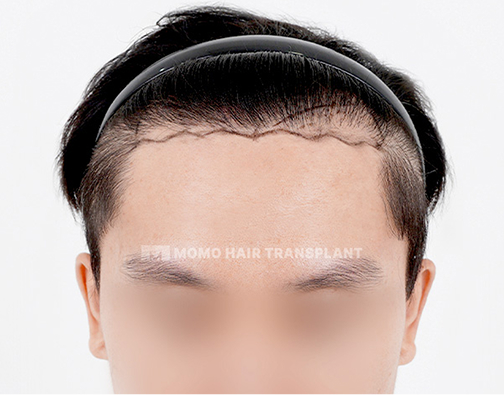
Before 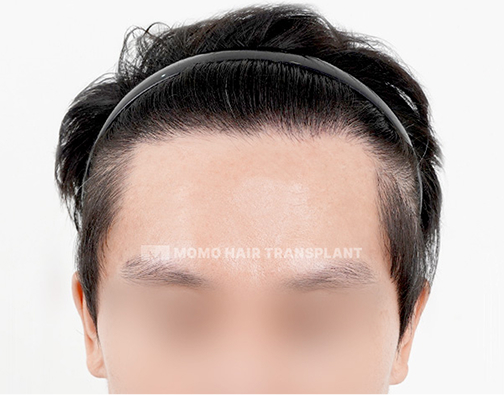
After - Density Reinforcement FUE Hair Transplant
- 1,500 Hairs
- 396 Days Post-op
2022.09.17 ~ 2023.10.18
-
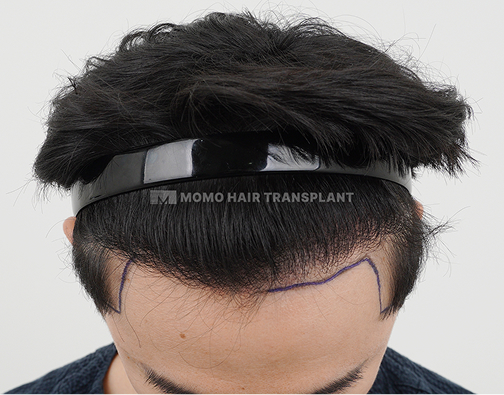
Before 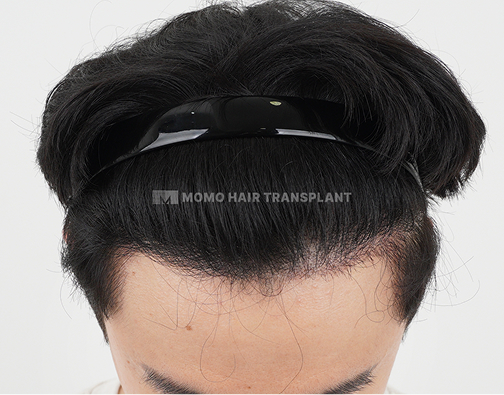
After - Line Lowering FUE Hair Transplant
- 1,200 Hairs
- 21 Days Post-op
2024.03.05 ~ 2024.03.26
* These photos were taken under the same conditions with the customer's consent.
* Results may vary by individual after surgery or treatment. Side effects such as inflammation, bleeding, infection, and asymmetry may occur, so please proceed after sufficient consultation with the medical staff.
Frequently Asked Questions
Questions and answers regarding revision hair transplant. We recommend consulting with an expert for more detailed information.
-
q.
How many times can revision surgery be done?
a.Theoretically, revision is possible if there are sufficient donor follicles in the occipital area, but feasibility is decided after an accurate diagnosis of the current scalp and hair condition.
-
q.
Which method is better for revision: Incision (FUT) or Non-incision (FUE)?
a.One method cannot be said to be strictly better. It is desirable to decide after an accurate diagnosis with a hair transplant specialist.
-
q.
I had FUT (incision) for the first surgery; is revision difficult?
a.You might think revision is difficult due to the scar on the back of the head from the incision. However, if the scalp in the occipital area is healthy enough, it is possible, so we recommend getting a consultation.
-
q.
When is revision surgery possible?
a.Since it takes 1 year to see the final results of a hair transplant, revision surgery is possible after 1 year, once the final outcome of the primary surgery has been confirmed.